
Ten Things You Probably Didn’t Know About “More Than a Feeling”
Inside the demos, basement tapes, and studio hacks that created Boston’s breakout hit.

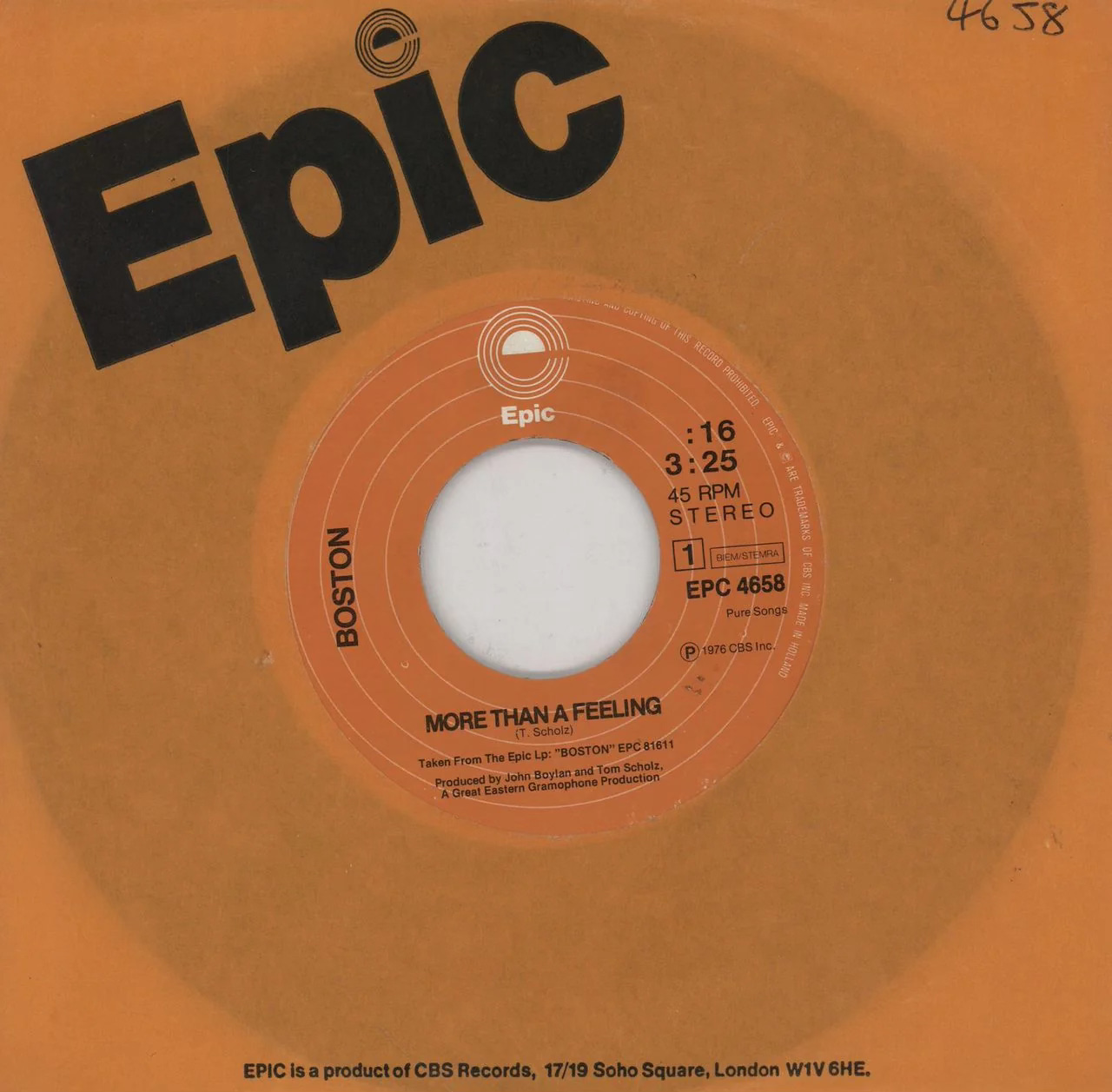
This year marks the 50th anniversary of the release of “More than a Feeling,” the rock anthem that sent the rock band Boston into the stratosphere in the fall of 1976. The 3 minute and 25 second cut off their debut album, Boston, may sound like the effortless creation of a modern studio, but it was the product of five years of trial, invention, and desperation by the band’s solitary mastermind, Tom Scholz.
Here’s a list of ten facts about the song that I learned while reporting Power Soak, my book about Boston. If you any others to add, please share them in the comments.
1. “More than a Feeling” almost had a different title.
The song grew out of a much earlier Scholz composition called “90 Days,” dating back to 1971 or 1972 and later retitled “How Do I Feel,” before evolving into the final track. As Scholz has testified, it was a case of selective salvage: “Just like a writer who writes a great paragraph and hates the rest of the chapter will throw away the chapter, but he’s going to save the great paragraph.”
2. “Marianne” was real—and was family.
The woman “walkin’ away” wasn’t entirely fictional. “There actually was a real Marianne,” Scholz told Entertainment Weekly in 2016. She was his older first cousin, a childhood crush he later said was unhappy about being immortalized in song.
3. The song borrows freely but assembles brilliantly.
Scholz has cited “Walk Away Renée” as an influence, and the central riff has been compared to “Louie Louie.” As one writer put it in 1987, “There’s not an original musical idea on the record,” but it’s “assembled with a wonderful ingenuity,” and “hardly a parsec of dead air.”
4. The sound wasn’t played, so much as engineered.
Scholz played nearly every instrument himself, layering up to 22 tracks of guitars and vocals until he reached “that one magic occurrence where it jumps out of the speakers at you,” as he has explained. His homemade Doubler and Echo devices were essential to that effect, along with his trusty Power Soak. (Watch Rick Beato unpack some of this intricacy layer by layer on his YouTube channel.)
5. It wasn’t on Boston’s first demo for Epic Records. Or the second.
“More than a Feeling” was one of two songs that were added months after the band’s November 1975 showcase for Epic Records (a division of CBS). Scholz had been sending the label tapes for years, and he has said the song helped him finally clinch the deal.
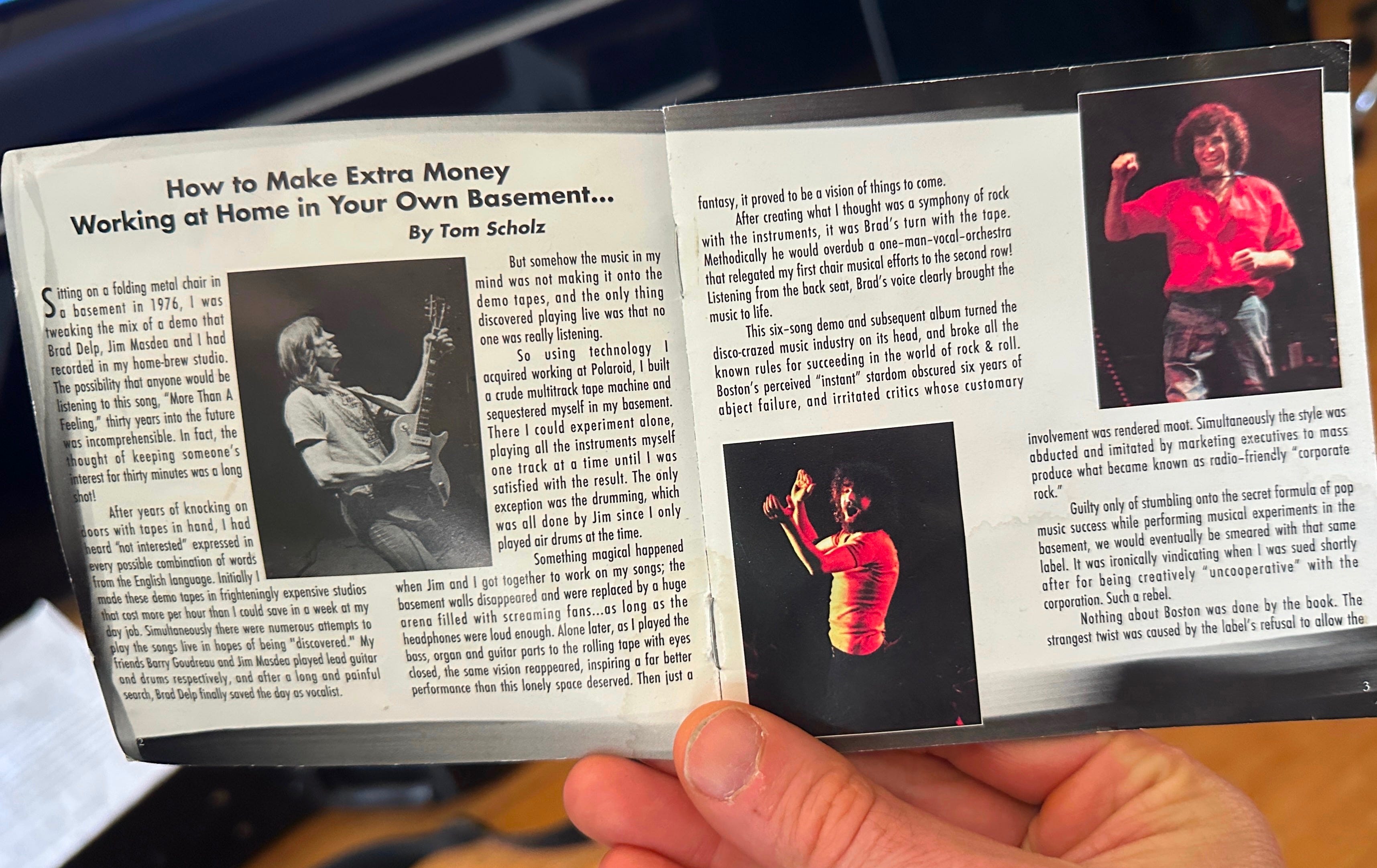
6. Most of the music was recorded in a basement—a fact that the band had to conceal from Epic.
Under union rules, the album was supposed to be recorded in a label studio or with a union engineer on the clock. Scholz, however, refused to quit his day job at Polaroid, which would have made recording prohibitively expensive. With producer John Boylan’s approval, he secretly recorded the core guitar and bass tracks on his Scully 12-track. Boylan then paid out of pocket for a remote recording truck to drive up from Providence, Rhode Island, run a snake through the basement window, and transfer the tracks from Scholz's rig to a 24-track machine.
7. As part of this “masquerade,” most of the vocals were finished in Los Angeles without Scholz present.
In early 1976, Brad Delp flew west with the rest of the band to record with a union engineer, while Scholz stayed behind in Massachusetts. “Brad had a lot of trouble,” Scholz told Modern Recording in 1979. “I think it had to do with the atmosphere.” Scholz later joined the sessions for the final mixdown and mastering at Westlake Studios.
8. The handclaps were recorded in a Los Angeles bathroom.
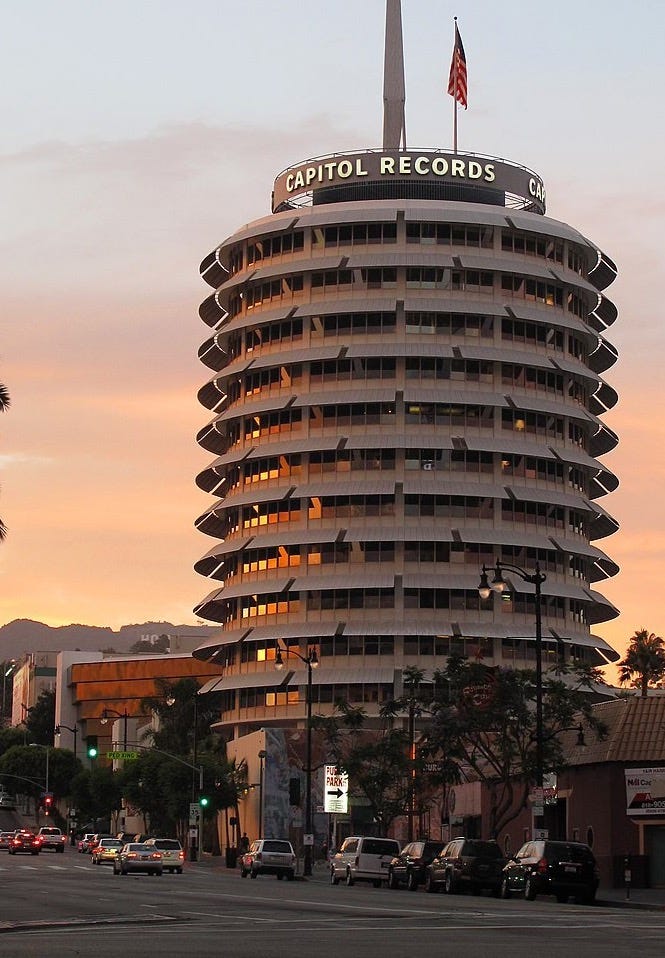
Percussion was the weakest link in Scholz’s early setup. The famous handclaps on “More Than a Feeling” were recorded in the men’s room at Capitol Studios, chosen for its natural echo. A microphone was run down the hall.
9. The drums were replayed beat for beat.
The original drummer, Jim Masdea, laid down the initial drum track in 1974, but by the time the vocal and instrument tracks were completed, Sib Hashian had replaced him and recreated his performance exactly. Masdea was later credited only on “Rock and Roll Band,” though he would return to perform on Boston’s third album.
“More than a Feeling” powered a historic debut, and a long afterlife.
Boston has sold 17 million copies in the U.S., and held the title of the best-selling debut album in American history until Guns N’Roses’ Appetite for Destruction surpassed it. “More than a Feeling” has now reached over a billion listens on Spotify and become a staple of film, television, and advertising. (Just don’t try to use it in a political campaign.)
If you enjoyed this post, please consider purchasing Power Soak: Invention, Obsession, and the Pursuit of the Perfect Sound, about Tom Scholz and his long fight with CBS Records.