"Does that mean I'm in the band?" David Sikes Opens Up About His Decade with Boston
The bassist on Brad Delp's warmth, Tom Scholz's intensity, and why he walked away.

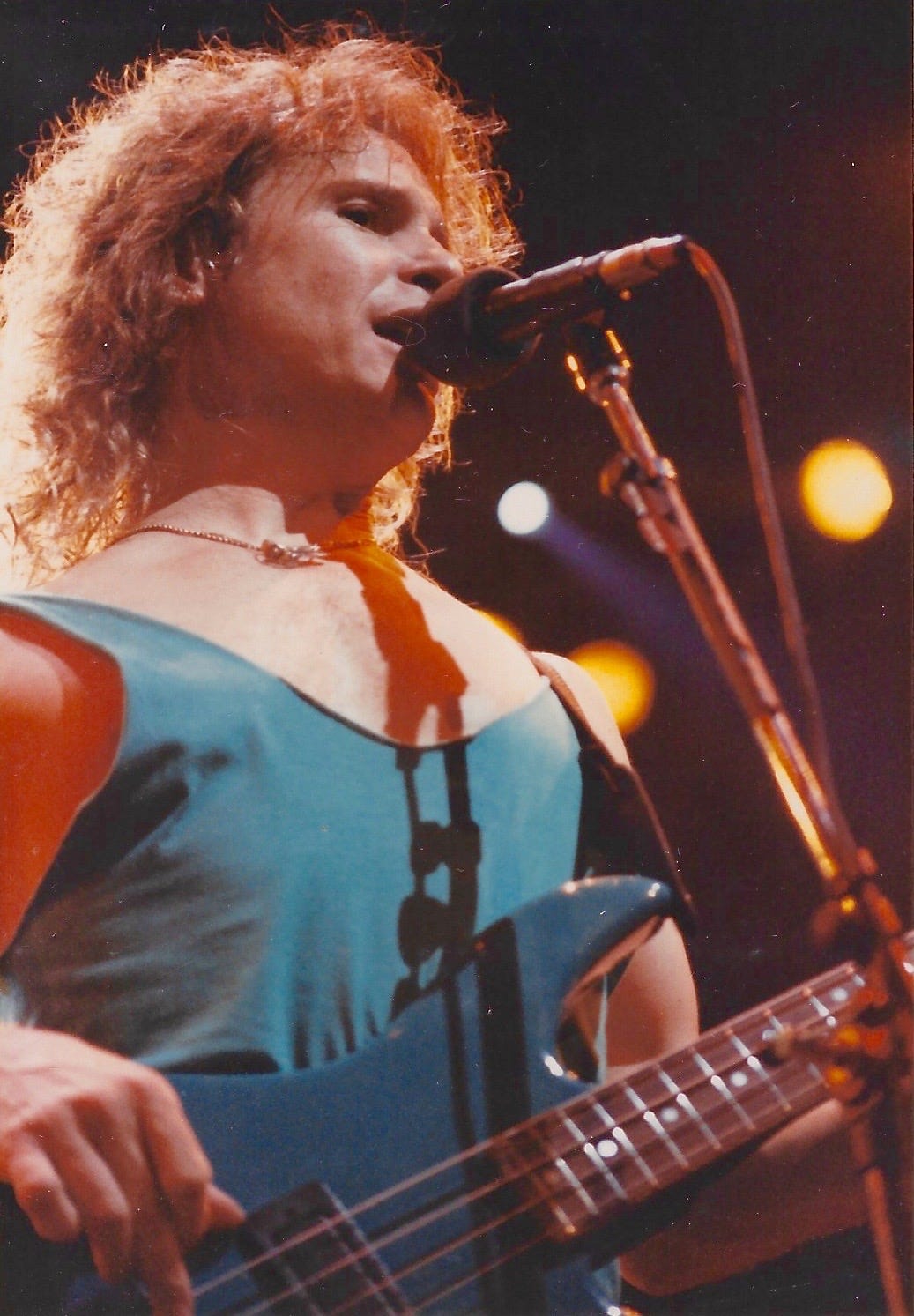
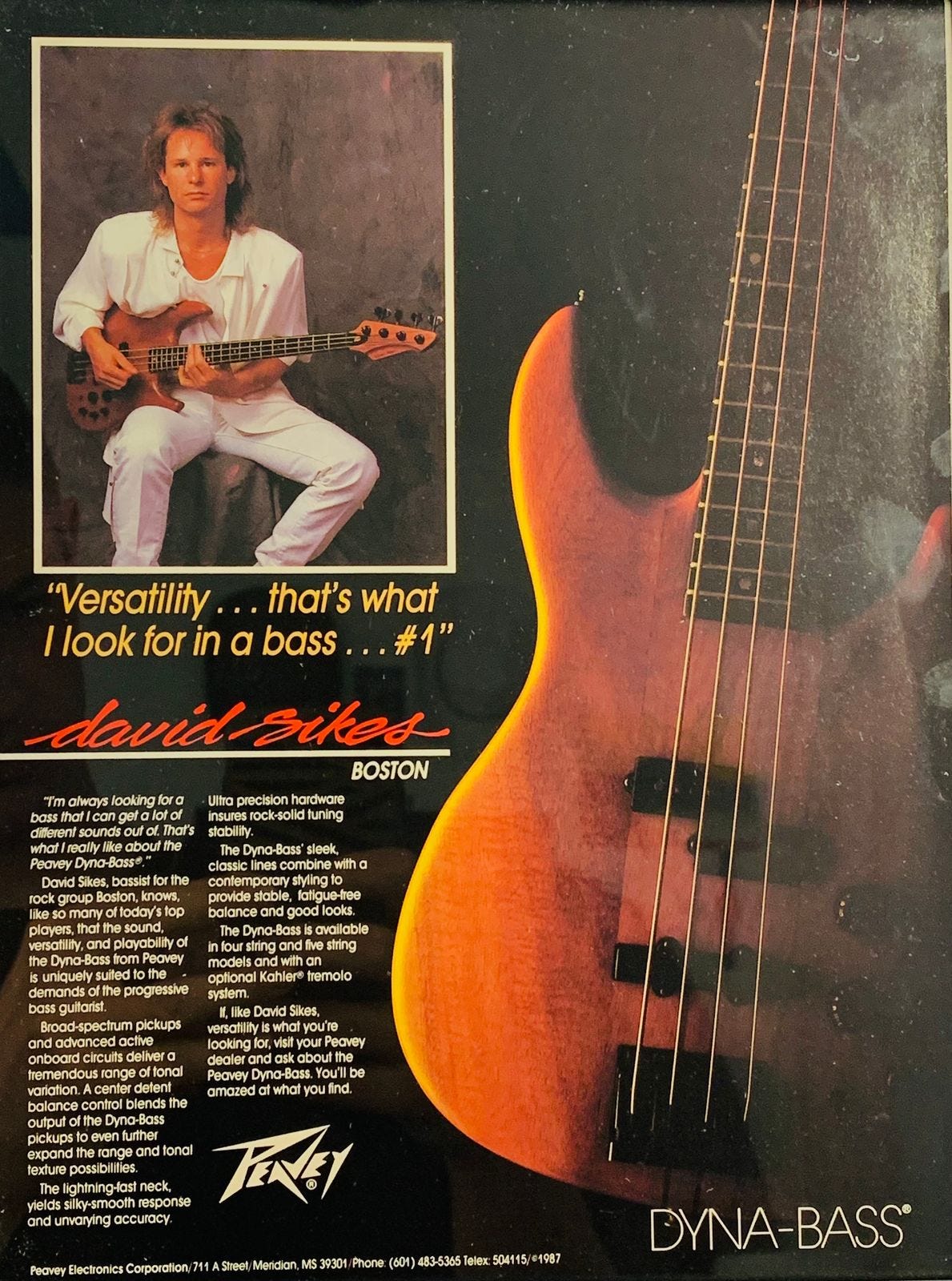
By the time Third Stage was released in 1986, Boston needed a new bassist. After an exhaustive search, the band selected David Sikes, who was living in California and playing with the melodic rock group, Giuffria. Over the next decade, he toured with Boston, wrote and performed on Walk On and Greatest Hits, and became close with Tom Scholz and Brad Delp.
I recently got a chance to speak with Sikes about his time with Boston. Below is an edited and condensed version of our interview.
What was it like to be a part of such a legendary group?
I have always been thankful for the opportunity to have been a part of the band. Like anything, there were ups and there are downs. But definitely some really high points. Especially that Third Stage tour we did in ‘87. We played about a city a week, maybe multiple. Sellouts everywhere we went.
I didn’t really know Tom at that time, so I was kind of oblivious to what was probably going on behind the scenes, and instead I was just enjoying playing and hanging out with Brad most of the time. I had a blast. Looking back, it was Tom’s band. I was an employee. I did everything I could to fulfill what he was expecting. And when I had opportunities to throw in some creative element myself, I did. And, sometimes, it was accepted by Tom.
So, how did it all begin? When did you first get the call?
I had been playing with this band, Giuffria. It wasn’t really my cup of tea, but I was trying to keep busy. They had an album deal, and that wasn't going real well. Then, I get a call from Gary Pihl, who I knew from my previous band, Aldo Nova. I got to know Gary because we did two different tours with Sammy Hagar. Gary calls me up and goes, “Hey, Boston’s looking for a new bass player. Would you like to audition?”
Of course I would. I was told they auditioned something like fifteen bass players. They said, learn three songs. ”More Than a Feeling” was one. “Amanda” was another. I cannot recall the third song. So I fly out there and Brad picks me up at the airport. He took me over to his house, and he had a little 8-track recording studio.
They had the three songs with all of the bass removed and all the background vocals. I replaced the bass on all the songs—that was a piece of cake. Then they wanted me to sing all the harmony parts, at least three different parts on each song. As we were recording, I’m hearing others that had been there before me. They had been recording guys and then erasing them to make room for whoever was next. But every once in a while they’d miss something, and I’d hear somebody else’s vocals. And I’d think, “Oh my god, that guy’s really good. That’s it for me. I’ll never compete with this.”
We didn’t get done till 3 o’clock in the morning, and I had flown from the West Coast. I was dead tired. I went home [to California] and waited a few months. Then, Gary calls again: “You are number one in our book. We want you to fly back out and meet Tom.” I couldn’t believe it. I asked Brad later, “There were some really good guys. Why did you pick me?” He said, “You knew how to blend. They did not.” I’m a bit of a chameleon that way.
So I flew back. We got together and jammed for a while. Knowing what I came to know about Tom, he was definitely checking out my personality. Who’s this guy, right? At the end, he said, “Can you be back here in a couple of weeks to start rehearsing?” I said yeah. And he starts walking away. I called after him. “Does that mean I’m in the band?” He said, “Oh yeah.”
The band had essentially been on hiatus during the recording of Third Stage. You would be joining them for their first major show in eight years, The Texxas Jam in Dallas. What was that like?
I was a big Boston fan before I ever got in the band, so it was certainly a magical moment. In Aldo Nova, we had played some pretty big places, so 80,000 people wasn’t brand new to me. But that was my first real official gig with Boston. We had some warm-up shows beforehand, but that was the real coming out.
What I remember most is that Aerosmith had played before us. I walked out on stage, looked to my left, and Steven Tyler and Joe Perry were standing over by the monitor mixer. I thought, “Wow, those guys are there. I hope we sound good.” Next to the monitor mixer, there’s a guy who can solo any individual voice or instrument—so if you want to really hear what somebody sounds like without the cocoon of the band, that’s where you go.
And Tyler and Perry were standing right there. At one point Tyler gave us a little nod of recognition. They took off after a couple songs. But that’s the memory that really stands out.
What was Tom like on the tour?
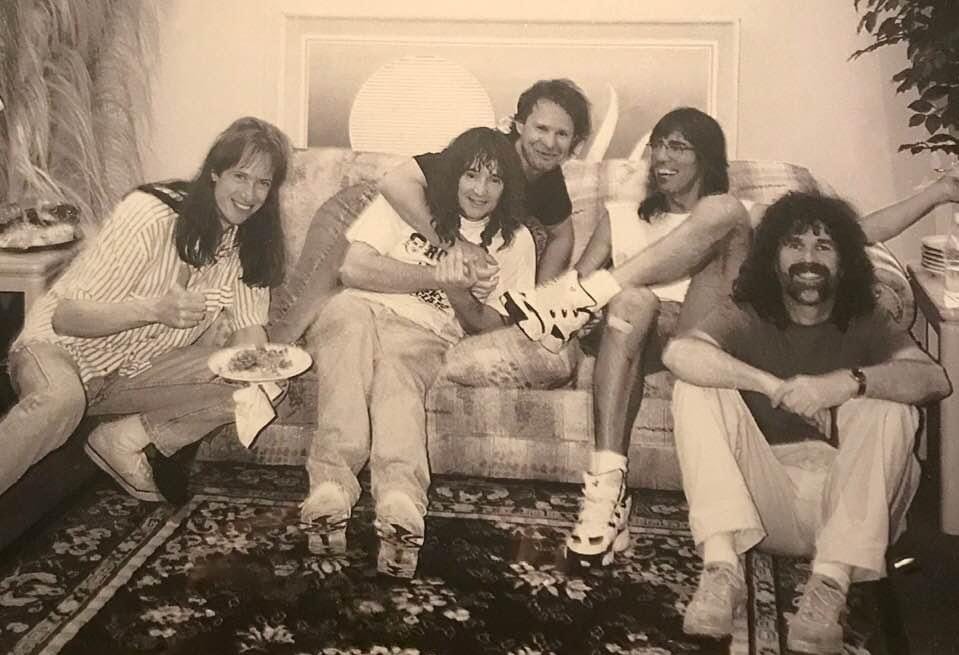
Very much to himself. He usually had his own dressing room. Most of the time he was laying on a portable bed they’d bring around because he had a lot of back issues. He’d lay there and sort of finger his guitar. Brad and me and [drummer] Doug Huffman, we all hung out. Every town we went to, if we had time to sightsee and goof around, we did it together. Gary was at Tom’s beck and call, overseeing the road crew and technical issues. I didn’t really see much of Tom at all.
But you did spend a lot of time with Brad.
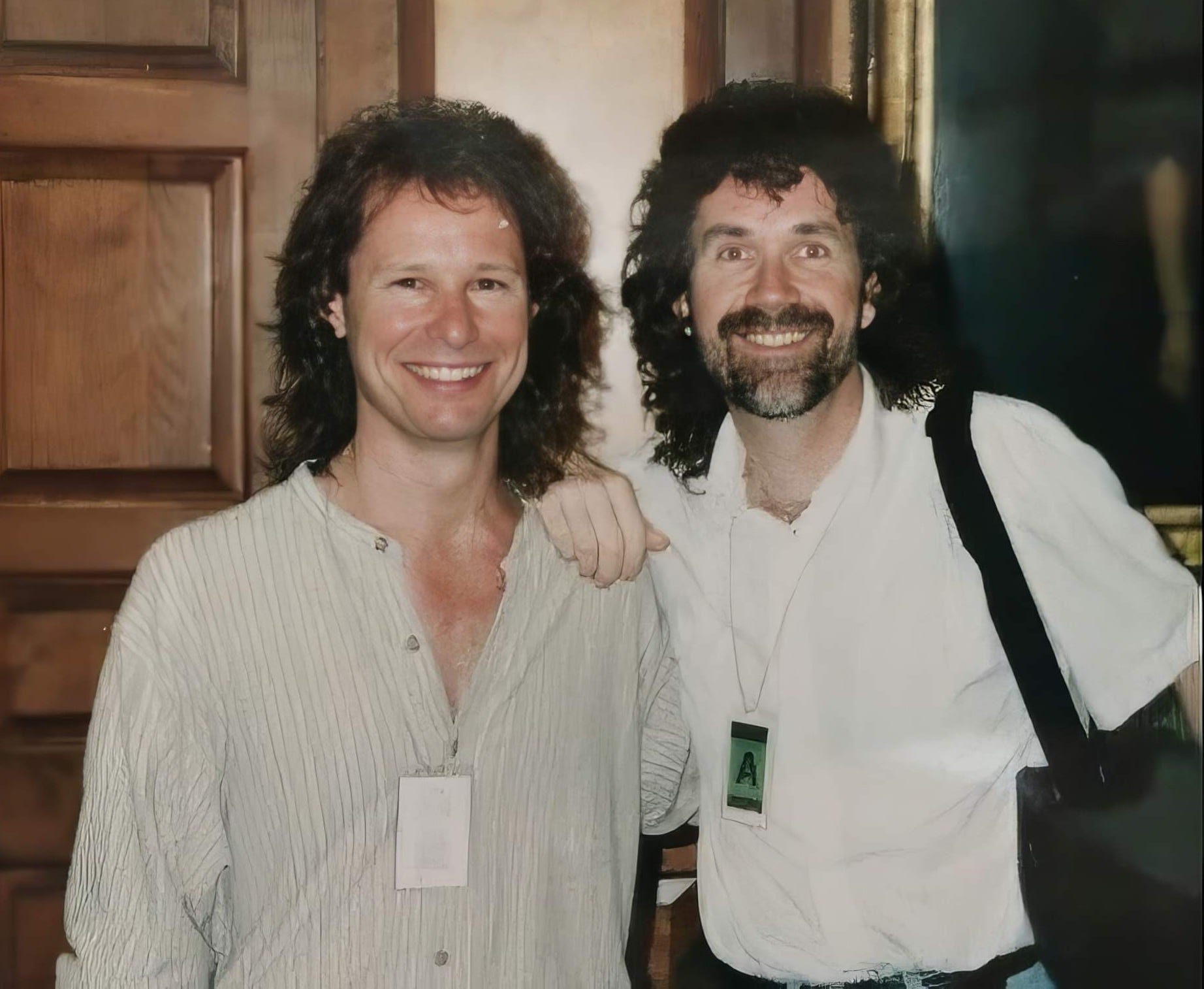
When I first came out to Boston, they put me in temporary housing. Brad ended up moving in right by me in the same complex. He’d come over all the time. He did everything he could to make me feel comfortable because I didn’t know anybody, and I didn’t know the East Coast. He’d come over and go, “So you love history, right? Let’s go to Concord.” He’d take me out on these day trips, show me historical monuments. One time we retraced the retreat of the British from Concord back to Boston. He really became such a great friend. He’s quite a joker too, and I can be also, so we would have a lot of fun pulling pranks, especially on poor Doug. That’s probably what stands out the most—just how warm and concerned and encouraging he was.
Tell me about one of these pranks.
Doug was from Arkansas, and he had some—I’ll call them Okie ways—that we thought quite amusing. He’d attach syllables to simple words. Like instead of “Oh man,” he’d go “Oh, Manishewitz.” He’d say things like “Hot dog buns!” in all seriousness. One funny one: he said to Brad, “Hey Bradder. You look down. Is there anything I can do for you?” And Brad, with a straight face, goes, “Yeah. Quit calling me Bradder.”
Doug would sometimes wear bicycle shorts on stage with no underwear. There were times when he’d jump out from behind the drum kit and start dancing, and you could see girls in the audience going, “Oh my god, look at that.” Brad came up with this parody of “Young Girl”: ”My love for you is way out of line, Better run, girl. I’m really well hung, girl.” We would sing that to Doug in the van on the way to the show.
On tour, we always had boxes of Wheaties in the dressing room. It was in our rider. Brad would draw speech bubbles coming out of the guy’s mouth on the box and write hilarious things related to Doug. Unfortunately, I can’t remember any of them. After a while, the road crew started taking notice, and the first thing they’d do at a show was check what Brad had written. I’d be there egging him on. It got to the point where Doug blew up. “I’m sick of this shit.” He went off on me. He couldn’t go off on Brad, the lead singer of Boston. I’m just a lowly bass player, so he went after me.
Tom has long been opposed to drugs and alcohol. Did you have to make any kind of agreement about that?
No, as a matter of fact, I got Tom drinking martinis at one point. On the first tour, we had a jet with a stewardess. I think Tom saw me ordering one and went, “What’s that?” He’d pour a bunch of olive juice into them—way too salty for me. He would have an occasional beer. I can’t imagine Tom using drugs ever. At one point I asked Brad, “So, you and Tom wrote ‘Smokin’?” “Yeah.” “Have either of you guys ever smoked pot?” He said “no.” We would have people run to the front of the stage trying to hand us joints while we’re playing. It was kind of amusing that they’d written “Smokin’” and neither one of them had ever smoked pot.
What did you understand about Tom and Brad’s relationship?
They had kind of an employer-employee relationship. Brad was basically there to say, “What do you want, Tom?” When you complimented Brad—and I heard this numerous times—he wouldn’t even take credit for his vocals. He’d say, “Well, that’s Tom. Tom is producing this record and getting me to sound that way.” I would tell him, “You say that’s Tom? Okay. But if Tom asked me to do that, I couldn’t. And there are a lot of other people who couldn’t.” As far as I’m concerned, he’s one of the best I’ve ever heard and ever worked with.
They went their separate ways several times over the years.
Every time a new record came out, Brad was ready to wander. It happened with Don’t Look Back, and again around Third Stage. When Walk On happened, Brad called and said, “I’m going to go do this band with Barry Goudreau.” Brad would never tell Tom, “Find somebody else.” He’d be more like, “If you want to use me, maybe we can make it work.”
The music Boston was doing wasn’t really Brad’s favorite thing. He was a huge Beatles fan, and he liked R&B. But he never put down Boston. When I was out of the band, Brad called me and said, "Man, I admire you. I wish I could do the same." I think Brad wasn't sure what he would do for a living. He wasn't convinced he would go step into some other band and make a great living. He used to always tell me, "You know what I used to do before I played in Boston? I installed heating elements into Mister Coffee machines."
When did you start to really get to know Tom?
In the early nineties, when he was putting his recording studio back together. He’d torn apart the original one. He had a new house. I’d fly back and get together with him over songs, going over ideas. Sometimes with the whole band, sometimes not. We ended up playing a lot of pool together, afternoons at his house between recording sessions. That’s when I got to know him much better. I thought of him as a real friend at one point.
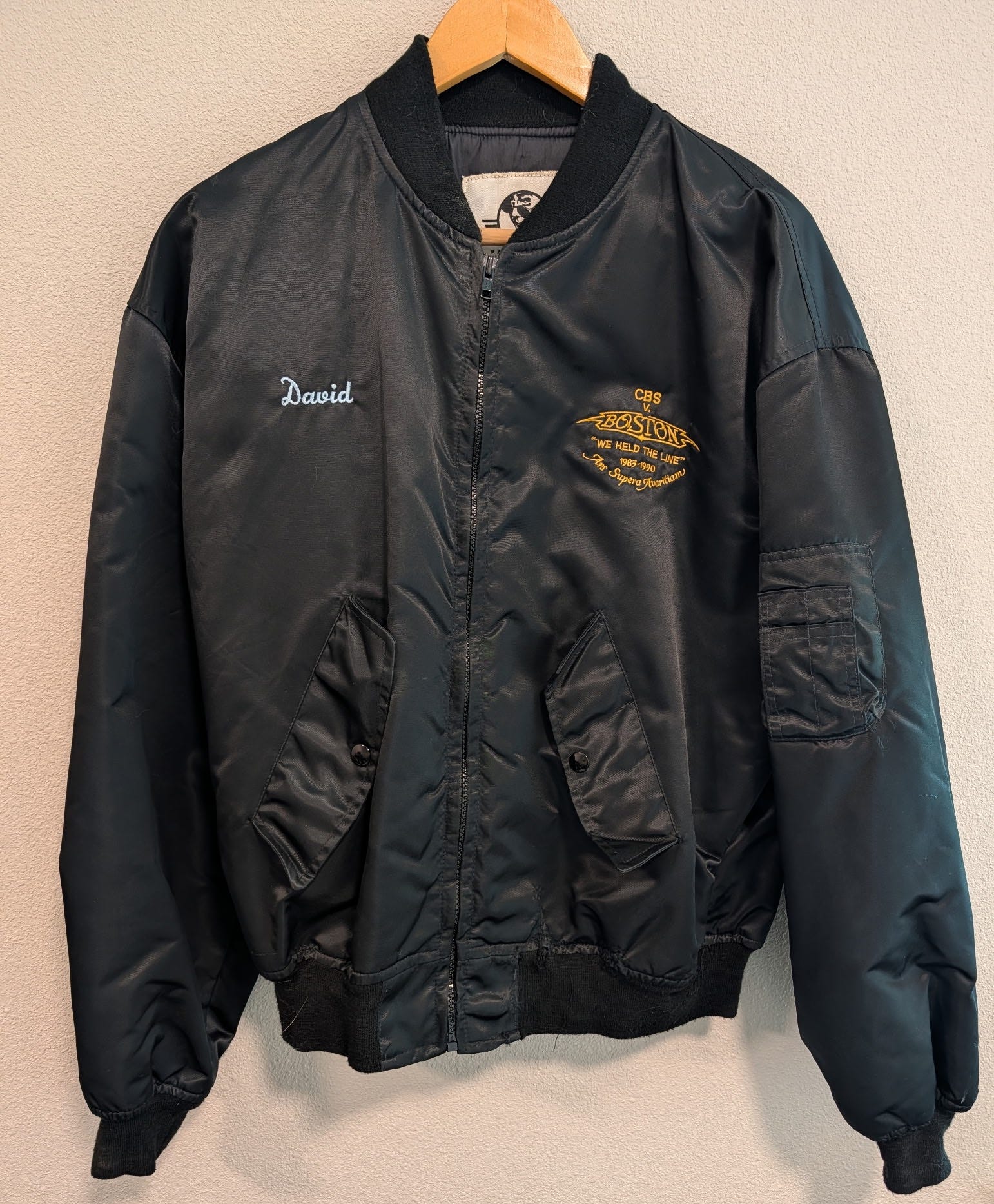
Tom spent seven years in litigation with CBS Records over the long-delayed release of Third Stage, a topic I write about in Power Soak. He eventually prevailed following a jury trial in New York in 1990. Did that conflict ever come up?
I don’t remember anything too specific, other than when it was official that CBS had lost the lawsuit, I remember being told Tom went out to celebrate with Gary and the manager. They had a milkshake. It’s not how I would have celebrated, but okay. At some point they made jackets that commemorated it. I probably still have mine. It said “CBS v. Boston” on the front.
You co-wrote five songs on the Walk On album. What was that creative process like?
Tom would say, “I want you to write lyrics on this song. I’ve got no ideas for it at all.” For “Walk On,” I said, “What’s it about?” He goes, “I don’t know.” Neither did I. It was like a creative English class. I’d come up with things and send them to him, and he’d go, “I like that. I don’t like that.”
For “Magdalene,” there was this melody from another writer that sounded like a nursery rhyme to me. I hated it. For weeks I was trying to write lyrics to it and getting nowhere. I finally realized the problem was the melody. So I changed it completely, re-recorded it with Fran Cosmo.
I was driving with Tom one day and told him. He said, “Do you have another idea?” I said, “As a matter of fact, I just happen to have a tape here.” He popped it into the cassette player in his Toyota Camry—which was funny, because Tom’s like six-five, and when he’s driving it, you do a double take. He may have modified it. He looks like he’s in the back seat.
Anyways, he listens, pulls it out, looks at me, and goes, “I like that.” The guy that wrote “More Than a Feeling” likes it? Okay.
What other songs did you contribute to?
The same thing happened with “Surrender to Me.” We didn’t have a chorus on that one. In the recording studio, I said what about “Surrender to me”? And I sang the melody that I had heard in my head. Brad told me this kind of thing just didn’t happen. Tom didn’t record and write songs live in real time. He was a solitary creator. Even when they were working together, they weren’t in the same room.
But Tom said, “That’s interesting. Let’s record it.” I showed it to Fran, Fran sang it. “I kind of like that. Let’s put a harmony on.” And it just came together. Moments like that were really fun for me. Tom would always have an opinion on things, and he would add some things and take some things. I think for him, he feels so overwhelmed on the music part of it all, he didn’t want to have to do that, too.
Tom also got me to sing one of the songs that was released on the Greatest Hits album. I tried to talk him out of it. I said, “Nobody wants to hear me sing this. They want to hear Brad.” He goes, “No, no. I want this after-hours smoky kind of feel. Brad’s voice is too pure for that. I think you should do it.” So I did. And Brad was a hundred percent supportive.
What did you think of Tom’s own talent?
He’s a master arranger. That’s what stood out more than anything. I had a song on Walk On called “I Know That We Can Make It.” I sent it to him. He came back and said, “You’re going to either love this or hate this.” He sent me a cassette, and on it he wrote, “If you hate it, here’s my lawyer’s address and phone number.” I was blown away. My song was okay, but when he made his changes, it became something entirely different. He makes incredible use of arranging guitars to sound otherworldly. Tom’s not a jammer. He gets this vision of the way something’s supposed to sound, and he goes right for it.
What was it like watching him work in the studio?
He’d record multiple guitar solos, trying to make each one different. He wasn’t perfecting one approach. He wanted a bunch of different approaches. Then he’d go through them: “I’m going to grab a few bars from track one, half a bar from track two,” and make a composite. On “I Need Your Love,” that guitar solo comes from and goes to places you don’t expect, and it’s a product of that process. With bass too, he’d say, “Record four different approaches.” Which was the hardest thing for me, because normally when I hear a song, I immediately know how I want to play it.
Tom has spoken about how keyboards came naturally to him, but he had to really work to keep his guitar skills up to snuff.
I never was under the impression that Tom was a guy who sat around practicing his guitar or anything like that. It was more like, “Uh, oh, we’re going to go on tour.” He had to bring himself back up to speed every time. Tom would sometimes come in, play half a song, go to play a solo, and the pick would slip off the string. He’d get pissed off and leave. We’d finish rehearsal without him. A lot of times it seemed like he had to go back to the records and go, “What did I do?” He had to try to remember this stuff and learn his own parts by listening to the records.
How would you describe his personality?
Pretty private. He didn’t trust a lot of people. I think one of the reasons he and I hit it off is that I was honest when he’d ask me questions. I think he was concerned that a lot of people just yes-manned him. They didn’t want to say anything conflicting because it could affect their job. At least he thought about what I said, whether or not he agreed.
At one point, his lawyer Steve Simon called me up and said, “Tom wants you to interface with the record company.” I didn’t want that job. It wasn’t like I was being hired with a salary. It was just, “You’re in the inner circle. Tom trusts you, and he’d like you to do that.”
What finally made you decide to leave?
I had two young sons growing up, and I was missing their childhood. But there was another side: we didn’t work enough. We were offered a tour in Japan—big money—and Tom said no. That really bothered me. He didn’t need the money, but others did, including me. I started feeling uncomfortable having my finances rely on him. I’d been playing in bands all my life, been in two other bands, had record deals, toured. I thought I’d had a pretty good run. Maybe it’s time to move on.
In February 1998, I bought an insurance agency. I had no experience with insurance at all. Tommy Tutone, who performed the hit ‘867-5309,’ was a friend of mine. He told me I should think about insurance. He explained that I could own my own business, and it was "blue sky”—I could be as successful as I wanted to be. I bought an agency from a guy who’d been in business thirty years. I did all of that without even talking to Tom. My relationship with him was so distant at that point. The company, Allstate, put on my website, “This guy is a former bass player of Boston.”
Tom’s lawyer Steve Simon sees it. One day, he calls me: “Oh, you quit the band?” I said, “No, I haven’t.” He said, “Yeah, you have. I see it right on your website. I’ll let Tom know.” And that was that. Tom and I never had a conversation about it.